
| Extension | Size | Supported version | Supported renderers | Format description?Compatibility |
|---|---|---|---|---|
| .max | 4.71 MB | 3ds MAX 2011 or above |
|
All Design Connected 3d models are originally created in 3ds Max 2011 and V-Ray renderer. We use in-house developed automation tools to convert our models to support other renderers like Mental Ray, Built-in Scanline, Corona and Maxwell, with MXM and MXS files included. All Design Connected 3d models are originally created in 3ds Max 2011 and V-Ray renderer. We use in-house developed automation tools to convert our models to support other renderers like Mental Ray, Built-in Scanline, Corona and Maxwell, with MXM and MXS files included. Files units are centimeters and all models are accurately scaled to represent real-life object's dimensions. The model comes as a single editable mesh or poly object (or as group for rigged models or where displace modifier has been used) properly named and positioned in the center of coordinate system. No lights, cameras and render/scene setup are included unless otherwise stated in the particular model’s description. |
| Extension | Size | Supported version | Supported renderers | Format description?Compatibility |
|---|---|---|---|---|
| .c4d | 2.47 MB | Cinema 4D R16 or above |
|
All Design Connected 3d models are originally created in 3ds Max and for V-Ray renderer. Our in-house team of 3d artists handle all further conversions and adaptations to deliver best possible visual and technical quality of the Cinema 4D content we offer. All Design Connected 3d models are originally created in 3ds Max and for V-Ray renderer. Our in-house team of 3d artists handle all further conversions and adaptations to deliver best possible visual and technical quality of the Cinema 4D content we offer. Files units are centimeters and all models are accurately scaled to represent real-life object's dimensions. The model comes as a single editable object (or as a group when necessary) properly named and positioned in the center of coordinate system. No lights, cameras and render/scene setup are included unless otherwise stated in the particular model's description. |
| Extension | Size | Supported version | Supported renderers | Format description?Compatibility |
|---|---|---|---|---|
| .skp | 1.91 MB | SketchUp 8 or above |
|
SketchUp file format with basic materials and textures. |
| Extension | Size | Supported version | Supported renderers | Format description?Compatibility |
|---|---|---|---|---|
| .fbx and .obj | 3.25 MB |
|
OBJ an FBX files with diffuse colors and textures.
|
|
| Extension | Size | Supported version | Supported renderers | Format description?Compatibility |
|---|---|---|---|---|
| .aof | 533.61 kB |
|
Abvent Artlantis file format with materials, proper shaders and textures.
|
|
One purchase gives access to all file formats available. By default only .max file format is selected for download.
During the checkout process and before downloading a model you will see a list of available file formats to make your selection.
You can download at no cost all additional file formats needed at any time from "Downloads" page in your Account.
Product description
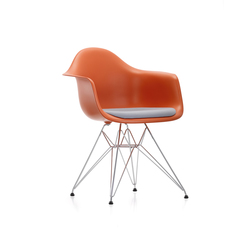
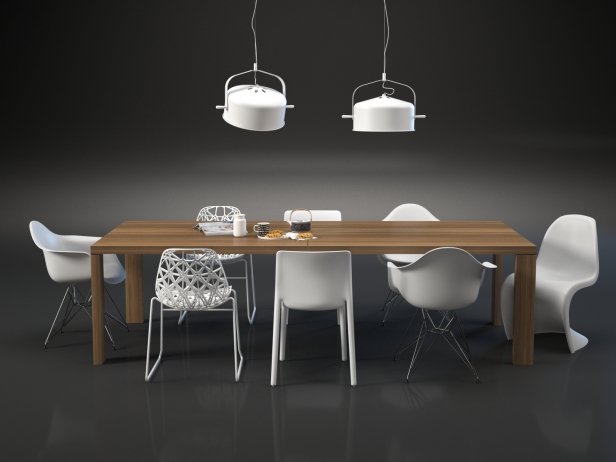
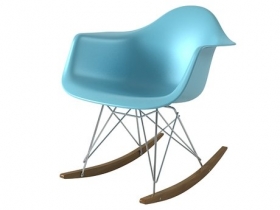
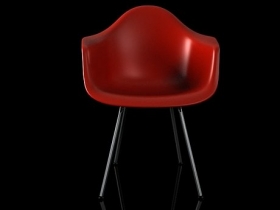
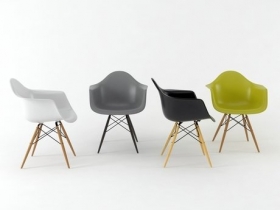
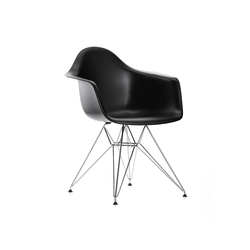
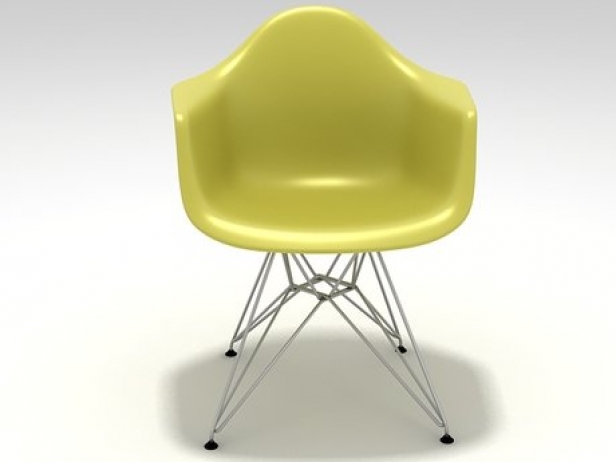
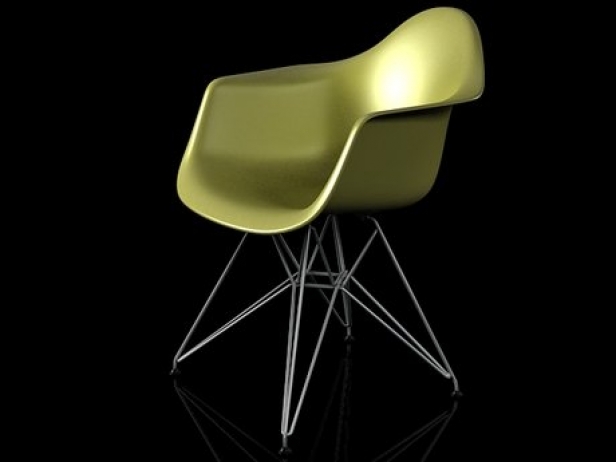
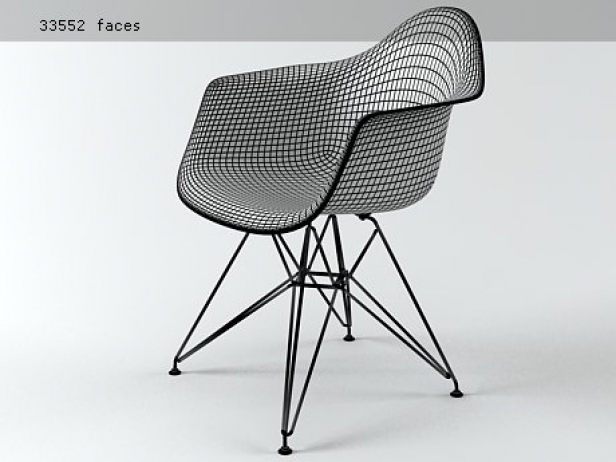
This chair was designed in 1948 and first presented at the New York Museum of Modern Art competition "Low-Cost Furniture Design". The comfortable seat shell, made of fibreglass-reinforced plastic, was combined with a variety of bases. It was the first plastic chair to be mass-produced. Seat shell made of solid-coloured polypropylene. Optionally with cushions in five different colours. Seat cover made of removable and washable knitted fabric. Various designs for bases.
DAR: Four-legged wire base with cross-struts, chrome-plated or in powder-coated grey (NCS-S-6500-N) for outdoor use. Special additives in the seat pan slow colour fading due to UV radiation. However, leaving the chair to be exposed to the sun for an extended period of time can result in changes in the colour.
These models are also produced by Hermann Miller, USA
Year of design: 1948